Tory Burch Prices in 2026: What You Pay at Each Tier
Think of the pricing here as a three-rung ladder instead of a single average. The rungs run like this: an entry band beginning under $100, a core band covering the bulk of the catalogue, and a top band that stays below European leather-goods pricing. Knowing which rung a category occupies explains more than any single number. Each band is described below, real products are named at observed figures, and the ladder is then broken down category by category. The numbers here were noted on the brand’s own US site in September 2026. Treat them as observed market prices and not as an official price list, because the brand publishes no fixed pricing and the figures move with season, market, material and channel.
How these figures should be read
Three cautions matter before any number is useful. An observed price is not a promise about next season, because colourways within one name can carry different prices. Rather than a point, a product name normally marks a range, and printed, patent and suede versions of a single sandal all came in at the same figure. Treat the edges as descriptive, because the bands blur into each other and some styles settle between them at around $225. None of these figures is a discount benchmark, since promotional pricing is separate and seasonal. Shape is what the ladder records reliably, and the shape remains stable.
The entry band, roughly $95 to $200
Here is where new buyers arrive, and the band goes deeper than most people assume. Small leather goods anchor the bottom, with a Romy flat card case observed near $95. Swim separates belong in this band as well, with a bikini bottom around designer handbags $95, a top near $110 and terry logo separates near $140. Footwear arrives in moulded rubber: a mini Miller jelly near $125, a Miller Cloud Light about $150. Wallets and belt bags fill the upper half, including a T Monogram coated jacquard envelope small wallet near $190. The ceiling is the telling figure: the leather Miller sandal was observed around $200, putting the brand’s most recognisable object at the bottom of its leather ladder.
Core band: about $250 to $600
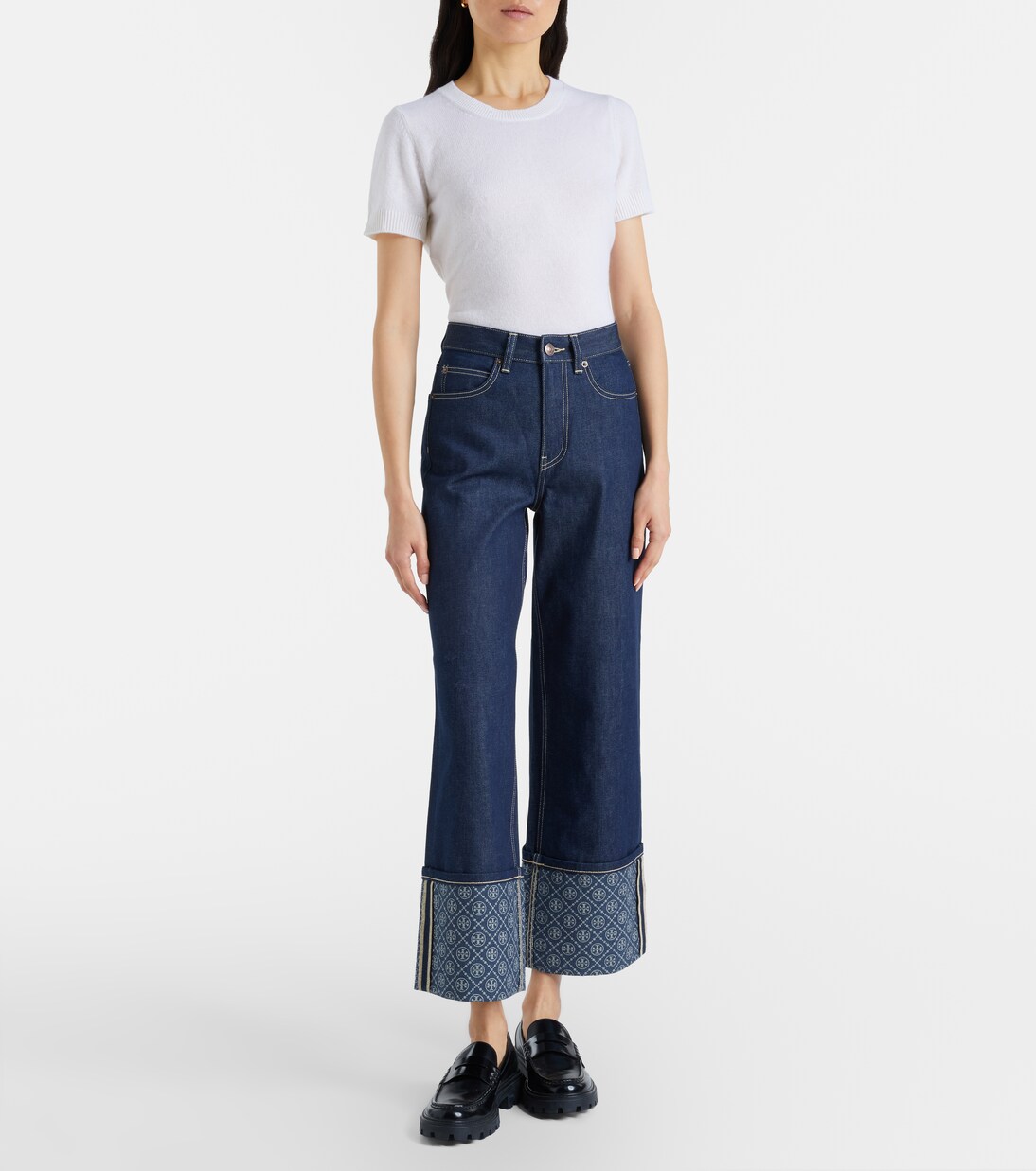
Nearly everything a shopper seriously considers sits inside this band. In footwear it covers sneakers around $250, most sandals between roughly $250 and $400, loafers near $325, and ankle boots about $475 to $500. The band also carries the relaunched Reva family: punk travel ballet styles between roughly $275 and $325, above the $195 the original carried before the 2017 pause. On the bag side the band begins with an Ella twist reversible tote near $260 and ends with a Fleming crossbody around $470. In tory burch clothing the band stretches across denim at roughly $350 to $395 and a printed viscose jersey dress about $550. Both a turnlock riding boot and a Miller crystal kitten heel mark the upper edge at around $600.
The top band observed: roughly $695 to $995
Lower than expected is the honest description of this ceiling, and it is the decisive fact about where the brand sits. The band begins with tall boots, a Charlie tall boot around $695 and a multi buckle boot near $750. The Lee Radziwill styles hold the bag top, with a small double bag and a bucket bag both near $795. A Fleming carryall near $695 and an Eleanor suede satchel about $750 sit just below. Outerwear fills out the band, with a corduroy blazer and a denim shirt jacket around $750 each. The top number in the September 2026 reading belonged to a double breasted wool coat near $995, and nothing came close to a five-figure tier.
The three bands, set side by side
Laid out together, the bands describe a range that widens in the middle and closes early at the top. The entry band is dominated by small goods, swim and moulded footwear, and its job is to make the brand reachable. Leather, knitwear, denim and most of the bag catalogue fill the core band, while a narrow top band is reserved for outerwear, tall boots and a single bag family. The numbers in the table are observed market prices, read in September 2026. Read the middle row as the default and the outer rows as the exceptions.
| Tier | Observed span | What sits there | Named pieces at observed figures |
|---|---|---|---|
| Entry rung | About $95 to $200 | Cosmetic cases, card cases, hair clips, swim separates, jelly sandals, cotton tanks | Romy Flat Card Case at around $95; Miller Jelly at around $150; Miller Sandal at around $200 |
| Core band | About $250 to $600 | Most sandals, sneakers, loafers, ankle boots, denim, knitwear, most leather bags | Perry Tote about $395; Fleming Crossbody about $470; Printed Viscose Jersey Dress about $550 |
| Top band observed | Around $695 to $995 | Occasion pieces, tall boots, the Lee Radziwill bags, tailored outerwear | Charlie Tall Boot about $695; Small Lee Radziwill Double Bag about $795; Double Breasted Wool Coat about $995 |
The categories one at a time
The bands describe the whole range, but each category occupies a different slice. Footwear is the broadest of them, and the only category to span all three bands within one season. With no exotic-skin tier to stretch into, bags start higher than footwear and end lower. The reverse is true of ready-to-wear, which enters near the top of the entry band and then works mostly above $400. Swim, sport and fragrance each cluster tightly rather than spreading. The three sections that follow take the categories in exactly that order.
Shoes, plus small leather goods
Tory burch shoes display the ladder most clearly, since a single silhouette turns up on several rungs. One family, Miller, covered about $125 for a mini jelly through to around $200 for the leather sandal. Higher rungs come next at roughly $250 for Capri versions, about $300 for knotted styles and near $600 for a crystal kitten heel. Sandals and espadrilles cluster between $250 and $375, sneakers at $250 to $300, loafers about $325 to $375. The steepest stretch belongs to boots: around $395 for a Romy Chelsea boot up to about $625 for a money clip boot. Small leather goods move in step, from near $95 for a card case to about $310 for a mini belt bag.
Bags in detail
Bags open around $260 in nylon and climb to about $795 at the top of the leather range. Between roughly $260 and $295 the nylon Ella styles form the floor. After them arrive the suede and croc-embossed Romy styles, from about $295 to $595. The middle is quilted leather, where Perry totes sit near $395, small Charlie shoulder bags about $450 and a Fleming crossbody around $470. Above that sit east-west satchels near $595 and an Eleanor suede satchel around $750. The Lee Radziwill family caps the category near $795, with no rung above it in the observed range.
Ready-to-wear, swim, sport and fragrance
Entry to ready-to-wear is around $150 for cotton tanks, with a jump to about $330 for a racerback tank and $350 to $395 for denim. From roughly $420 for a merino turtleneck, knitwear reaches to about $550 for a T Monogram jacquard cardigan. Skirts cover around $440 to $795, while dresses go from about $550 to $795. The most affordable category is swim: near $95 for a bikini bottom, about $250 for a balconette swimsuit. Tory Sport, which lives as a section of the brand’s own site and not as a separate label, runs from about $95 to around $440. Fragrance stays at the bottom, with travel sprays at roughly $35 to $40 and full bottles between about $108 and $250.
Discounts, outlets and the tory burch sale question
Real markdowns exist, but much of the online writing about them fails to describe them honestly. There is a recurring Semi-Annual Sale, with coverage of a July 2026 edition noting sandals under $100 and up to around half off. Quoted depths of 50 to 70 per cent circulate, though the top of the range is promotional language and not a promise. Reports describe a separate Private Sale as account gated, its cadence unconfirmed, which puts discounting around early summer and year-end. Physical outlet stores exist, mostly in premium outlet centres, but there is no online outlet — the brand states plainly it operates none. The label is carried by Nordstrom Rack and the TJX chains, which are expanding in 2026, whereas the Saks OFF 5TH online store closed entirely after Saks Global’s early-2026 bankruptcy.
Reading the brand’s position off the ladder
A range that ends near $995 is saying something deliberate about where it sits. The label is American accessible luxury: founded in February 2004, headquartered in New York, and still independently held. Around 400 of its own stores, a number the boilerplate has carried for several years, sit alongside 3,000-plus department and specialty doors. Unless it is stated plainly, a comparison with European leather-goods houses is not useful, as those houses run tiers this label lacks. No financials are published, which makes any revenue total an estimate, and the much-quoted $3.3 billion figure belongs to a December 2012 transaction rather than to a current valuation. On governance the record is clear: the founder is Executive Chairman and Chief Creative Officer, not the chief executive, while Pierre-Yves Roussel has been CEO since 2019.
